Most small service businesses don't set out to end up with a pile of separate tools. It just happens. You start with a website, then you add a booking app because that side grows. You take deposits through a payment link you copy and paste. Your client details live half in your inbox and half in your phone. Each piece made sense on its own, on the day you added it.
The trouble is that none of them were built to talk to each other. So you become the thing that connects them. You copy a booking into your calendar, send a payment link by hand, then write the confirmation email yourself. It works, but it quietly eats your evenings, and there are several monthly subscriptions going out for tools that each do one job.
This piece is about the other way of doing it: running the whole business from one place. Not a clever trick, just less stuff to manage.
What "one place" actually means
When people hear "all in one place" they sometimes picture a big complicated system. It's the opposite. It means the parts of your business that already belong together finally live together.
Your website, the bookings, the deposit payments, the emails that go out to clients, and your shop or portfolio all sit behind one login. A booking comes in and the deposit, the client record and the confirmation email all happen as part of the same step. You're not the bridge between five apps any more. You just check one screen.
Bookings are one part of this, and an important one, but they're not the whole story. We wrote about that side on its own in Bookings Done Properly. This piece is about the bigger picture: everything else sitting alongside it rather than scattered across separate accounts.
A real example: Amour Tattoo, Hull
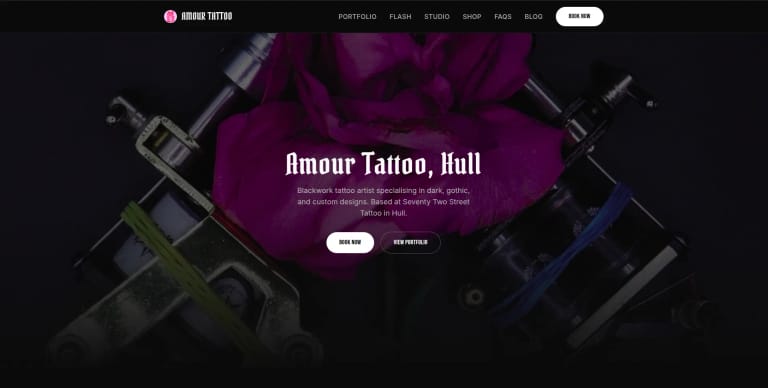
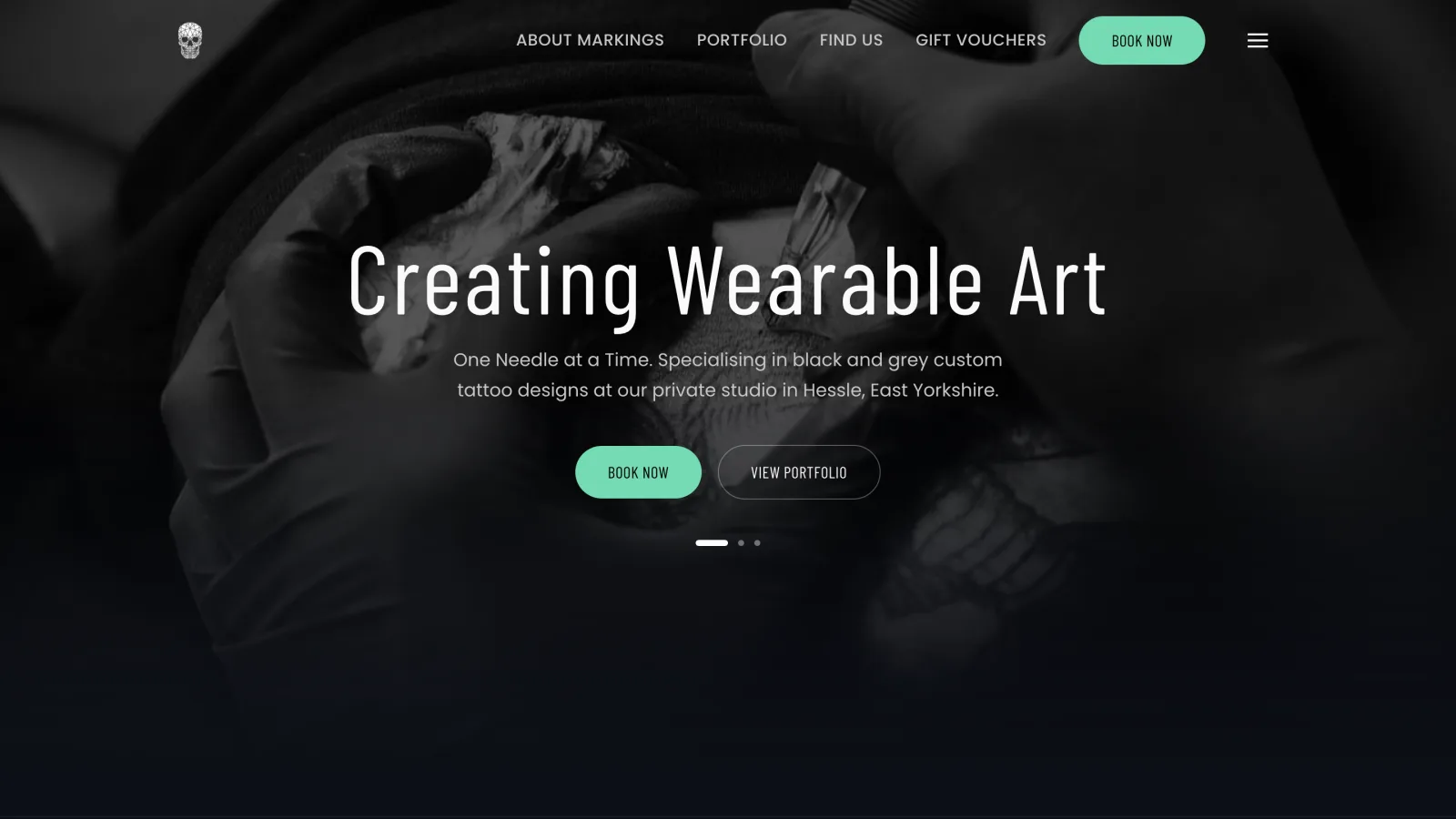
Amour Tattoo is a blackwork and fine-line studio in Hull. The studio had grown to the point where running it meant moving between a few different tools through the day: a website in one place, booking in another, payments somewhere else. That's a normal place to arrive at when you're busy and doing good work. Each tool had been added for a sensible reason. They just weren't designed to work together, and keeping them in step was becoming more effort than it was worth.
So we brought it all onto one platform. The website, the booking flow, Stripe deposit payments, the branded emails clients receive, the portfolio, and a small shop now run from a single admin. The artist sets things up once and the day-to-day mostly looks after itself.
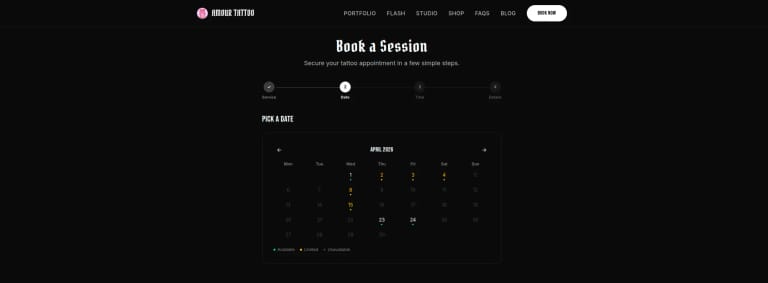
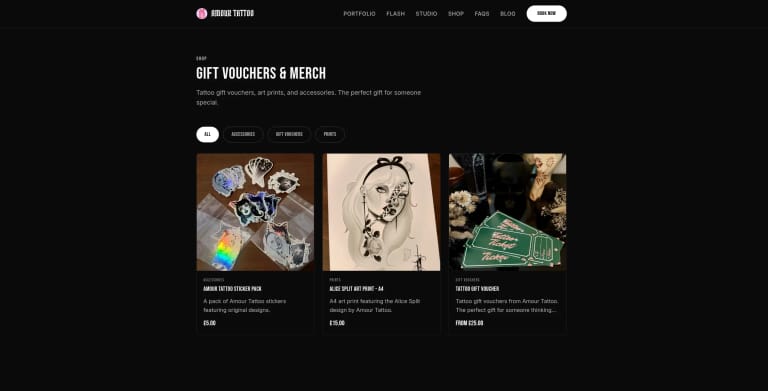
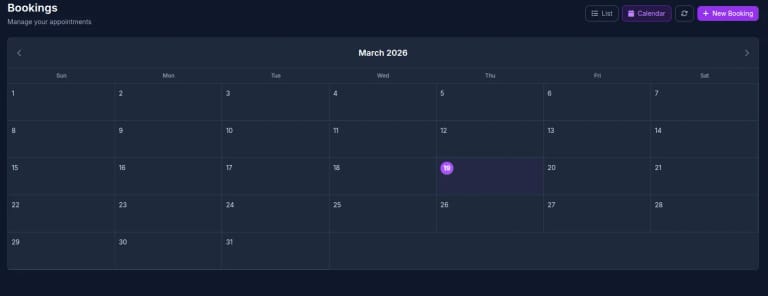
The bits that used to be separate jobs now happen together. A client finds the work, picks a service, sees real availability, pays a deposit through Stripe, and gets a confirmation email that looks like it came from the studio, because it did. The portfolio that wins someone over and the booking that signs them up are part of the same site rather than two different worlds.
Gift vouchers and prints sit in a small shop next to the services, so a sale that used to mean a back-and-forth message and a bank transfer is now just a checkout. And because the whole thing is one fast, well-built site, it does well in local search, which for a studio that lives on its area and its reputation matters more than any add-on.
Why one place feels calmer
The obvious win is fewer subscriptions and one bill instead of four. That's real, and it adds up. But the bigger thing is the mental load. When everything lives in one place you stop holding the connections together in your head. You're not wondering whether the booking made it into the calendar, or whether that deposit came through, or which app the client's details ended up in.
There's less to learn, too. One login, one set of menus, one place to look when you want to know what's happening this week. New things you add later, an extra service, a new product, a fresh page, all sit inside the same site rather than becoming the fifth tool you have to wire in.
It also reads as more professional to the customer. The booking, the payment and the emails all carry your name and your look, so the experience feels like one studio rather than a chain of handovers between apps that have nothing to do with you.
Where to start
You don't have to rip everything out on day one. Usually it's worth starting with the part that's costing you the most time or the most friction, and building out from there so the pieces join up as you go.
For a lot of service businesses that's bookings, since that's where customers either get in or drift away. If that's you, Bookings Done Properly goes into that one part in more detail, and HD Bookings handles appointments, real availability, deposits and a client portal as part of your own site.
The wider idea is the same one throughout: your website, bookings, payments, emails and shop don't have to be five separate things you manage. They can be one.
One place, answered
Common questions from studio and salon owners about running everything from a single platform.
It means the parts that already belong together finally live together. Your website, bookings, deposit payments, client emails and a small shop all sit behind one login. A booking comes in and the record, the deposit and the confirmation happen in the same step. You stop being the bridge between five separate apps and just check one screen.
Usually, yes. The obvious win is one bill instead of four, and that adds up over a year. The bigger saving is your time. You stop holding the connections together in your head, wondering whether a booking reached the calendar or a deposit came through. Less to learn, less to maintain, fewer logins to remember.
No. You do not have to rip it all out on day one. I usually start with the part costing you the most time or friction, often bookings, and build out from there so the pieces join up as you go. New things you add later sit inside the same site rather than becoming another tool to wire in.
Yes. A small shop for gift vouchers or prints can sit right next to your services, run from the same admin. A sale that used to mean a back-and-forth message and a bank transfer becomes a simple checkout. It is all one site, so the shop carries your name and look like everything else.
It helps because the whole thing is one fast, well-built site rather than a slow page pulling in separate tools. For a studio that lives on its area and reputation, doing well in local search matters more than any add-on. Speed and clean structure are part of how the site is built from the start.